Q&A WITH SUMAYYA JAMIL OF MY TAMARIND KITCHEN

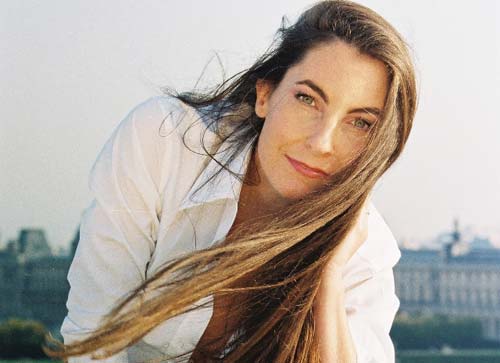
It’s always an absolute pleasure to meet people who are truly passionate about their work, especially if foreign food & culture are involved. And after discovering that Sumayya had also grown up surrounded by the Pink Diamond Salt used in our Himalaya chocolate bar, I couldn’t wait to find out more about the wonderful world of My Tamarind Kitchen…

Biryani

Please tell us more about your delicious cooking.
My mission is to highlight my heritage Pakistani cuisine. I grew up in Pakistan and I knew my food to be nothing but Pakistani. Moving to the UK has made me realize that my cuisine is often confused with other South Asian ones, some of our dishes are labeled as such and no one knows the history, tradition and cooking styles that make up the Muslim heritage cuisine that Pakistani food is based on. My hope is that through my writing and cookery classes, people will soon appreciate and taste the individuality of my cuisine.

You once told me that you used to be sick of the sight of pink diamond salt back home. Was it really everywhere?

I remember seeing these pink glowing lamps with tiny tea-lights within them twinkling by the dozens at open air weekend bazaars, in shopping malls and by the roadside. I never once gave them a second thought, though I always knew of their origin. Knowing that Himalayan Pink Salt is mined in Khewra Salt Mines (the second largest salt mine in the world), in Punjab, Pakistan – this salt is mined only on the Pakistani side of the Himalayas and shipped across the world. I don’t believe I ever bought a lamp, but now I wish I had. When I first realized that Himalayan salt was so trendy in the UK, I was proud to know it was mined from my country and that it’s properties are very beneficial to us and much better than regular salt for consumption. The lamps themselves provide mood lighting and the pink glow is meant to give you an overall sense of well-being. It is said the miners that work at Khewra are happy and calm, much to the contrary of others such as coal miners!

Pink diamond salt lamps

And is pink diamond salt used in many traditional Pakistani deserts?
I’ve been cooking all my life in Pakistan and I have never used the pink variety in food however we do use Kala Namak, or black salt in our savoury spicy snacks, in different masala blends such as Chaat masala, this adds a piquant, umami flavour and is used as a flavour enhancer. I have to say it doesn’t smell pleasant with its rather sulphuric aroma and unpleasant smell, it’s tastes better than it smells! Kala Namak is a hard black salt mined from the Himalayas as well, from the North West of Pakistan. I wouldn’t be inclined to use this in sweet dishes or chocolates, however Pink salt lends itself better for use in such sweet items instead. I intend to develop a few Pakistani inspired recipes using Himalayan pink diamond salt soon! (NB Sumayya has since told me she’s discovered that Pink salt is widely used for cooking in Northern Pakistan)

What flavours & dishes define Pakistani food for you?
To me, Pakistan food is defined by smoky meat barbeque aromas, fragrance of saffron, mint, coriander, star anise, all infused in rice, vegetables and breads. Seafood from the coast of the Arabian sea, Indus river and the freshness of seasonal vegetables and fruit. For example, Pakistani Sindhri mangoes are one of the best in the world as well as pink guavas and pomegranates and other lesser-known fruit such as Kinos (large oranges), Falsa (Grewia asiatica berries) Cheeko (Sapodilla) and Sharifa (custard apples.), are fantastic. To me all this defines Pakistani warmth, fresh produce and it’s haunting cuisine.

Kaghan Valley

I’m not sure if many people in the UK realise what a stunning country Pakistan is. What is your favourite place & why?
Pakistan topographically is a disparately beautiful land, with high snow capped mountain ranges such as the Himalayas and Karakorum (home to the K2); to the plains and plateaus of the arid dry desserts of Sindh and the fertile agricultural lands of Punjab. North Pakistan is known to be a green beauty with valleys and hilly land and many different races and ethnic people inhabiting these areas. My country boasts a rugged beauty that many don’t know about and sadly tourism has been stunted in the recent years due to political and security related issues. However, I am a firm believer that the land itself cannot be blamed for this, and one must celebrate the untouched purity my country has to offer and do our best to promote what we can positively. It is indeed a country worth being experienced.

It’s hard for me to choose one favorite place in Pakistan. I have three. One is in the North, Lake Saif-uk-Maluk in the Kaghan Valley, which is a glacial lake. The story goes that a famous Pakistani poet wrote about how a fairy called Saif-ul-Maluk fell in love with a Persian prince at the lake. The beauty of the lake is reflection of the mountains against the lake and people in Kaghan Valley believe that the fairies descend at a full moon by the lake. I also love Lahore, especially the Badshahi mosque, which is a celebration of the architectural genius of the Mughals, and is the real food capital of the country. However to me the seaside of the Arabian sea in Karachi with it’s balmy waters and silver sands will always hold the most special place in my heart and will remain home to me.

Badshahi

I love to learn more about the cultures of different countries. Are there any Pakistani books, music, film or art you would recommend?
Pakistani art, music, photography, film and fashion are at their greatest height, we are progressive yet stay close to traditions and ethnic beauty. Some of my favorite artists are Farhan Manto who creates atmospheric sketches of horses, Jamil Naqsh who is known for his oil depictions of birds and Gulgee (now deceased) a contemporary artist who was world renowned with his rather crazed colourful oil based splashes. Music in Pakistan is well developed and my favorite pop musicians are the now broken up group, Junoon, also Atif Aslam; while more folk style would be the Sufi singer Abida Parveen. Some of our fiction writers have won and been nominated for many international prizes such as Mohsin Hamid for a Reluctant Fundamentalist was shortlisted for the Man Booker Prize (now a movie staring Kiefer Sutherland and Kate Hudson), Mohammad Hanif’s A Case of Exploding Mangoes was shortlisted for the Guardian First Book and Kamila Shamsie’s Burnt Shadows was shortlisted for the Orange Prize for Fiction. Some of my favorite photographers and fashion designers are Tapu Javeri and Rizwan Beyg respectively. Pakistan has so much to offer, it’s really quite hard to do it any justice in one paragraph!

Bhuta

How will you be spending Ramadan?
Ramadan is a quiet contemplative time for me. I usually spend it being thankful for what I have, feeding those who cannot afford much and remembering and celebrating where food comes from. I don’t fast as often as I wish but I try to incorporate the key principles of the month such as these into my life and try to be respectful of people who do fast. Ramadan ends with the festival of Eid, where celebratory foods are prepared and shared with family and friends. It’s a time of rejoicing the end of a month of abstinence and purity of mind and body.

Finally, what exciting projects are coming next?
A lot more teaching, spreading the flavours of Pakistani cuisine, demystifying the spices we use and the cooking methods. Creating an understanding of our recipes and making people comfortable with cooking by estimation. I intend to write a lot more about Pakistan, Muslim heritage cooking and my culture for many more publications. Also I am writing a memoir-based cookbook inspired by the cooking I grew up learning in Pakistan and my happy safe memories from my childhood in Pakistan.

• Sumayya Jamil teaches Pakistani cookery classes in London and across the UK and is also a freelance food writer specialising in Pakistani and Muslim heritage cuisine and culture. For more recipes and cookery class details please see http://www.mytamarindkitchen.com

FATHER’S DAY ACROSS THE WORLD

On the 16th June, many countries around the world celebrate Father’s Day, which also seems to be a very popular reason to buy our luxury chocolate bars! However, Father’s Day is celebrated very differently across the places connected to our luxury chocolate…

LUXURY MILK CHOCOLATE WITH MASALA CHAIIndia
Father’s day continues to grown in popularity across India. Among Hindus, the day is often celebrated with a special religious ritual (puja) dedicated to fathers, either at home or at the local temple. Fathers have a very high status in India, next only to god.


LUXURY DARK CHOCOLATE WITH CHIPOTLE CHILLIMexico
Here, it’s a big family day where people give gifts and prepare & eat a large meal together. Although in Mexico City’s Bosque de Tlalpan, the day is celebrated by a festival & Carrera del Dí­a del Padre, which is a 21km race!


LUXURY MILK CHOCOLATE WITH PINK DIAMOND SALTHimalaya
People of the Kathmandu region celebrate their equivalent, Gorkana Aunsi around late August. The event, which literally means ‘looking at father’s face’, involves gifts, sons & daughters performing ceremonies of respect to their fathers & also visits to the temple, as it coincides with new moon day in the Hindu calendar.

WORLD TOUR

Francisca Mattéoli - World TourEarlier this year, I discovered the fantastic book ‘World Tour’ by Francisca Matteoli, which documents the ‘golden age’ of travel and exhibits a wonderful array of luggage labels which were collected in this era by the grandson of Louis Vuitton. I was so fascinated with this voyage of discovery into the ‘Belle Epoque’ that I had to ask the author more about the book. I hope you enjoy our Q&A as much as I did.

It feels like you put your heart & soul into this amazing book. Was it a labour of love? And what part of the project did you enjoy the most?

I am Chilean, my mother is Scottish, I lived in Brasil, I am now living in Paris… I wanted to write about all the coutries that are important for me, evoque emotions, get the readers involved, and tell stories. That is what I like to do. In my book I developed all these aspects in 21 different travel stories. It was very exciting and fun. I had to do a lot of research, which I adore. I wrote on my great-grandfather and on my family which also lived in hotels, imagined how their life was and the one of Gaston-Louis Vuitton, that was inspired by anecdotes and memories I had in a corner of my mind. The challenge was to write a book that had never been done before because so much has already been said about hotels, but so little about personal and human experiences of that golden age of travel. Gaston Louis Vuitton reminded me of members of my family, such as a distant uncle or cousin. I found inspiration in a million details and really wanted to share all of the fantastic memories I had, and the spirit of adventure that existed at another time. I enjoyed every minute of it.

ALBERGO DEL MEHARI

The book contains an incredible range of beautiful labels. Has this great tradition disappeared from hotels completely?

Yes, unfortunatly, and I don’t think you can find anything today that can replace the labels of that time. First because nowadays things are not made to last. We don’t know how we are going to live in 5 years from now, but I still have my parents travel albums and the labels they used to attach to their suitcases. It is the duration that also makes these luggage labels so beautiful and fascinating. They still exist centuries later. They made it across time, keeping their elegance and dream. You don’t find those labels in hotels anymore because the world changed completely.

Luggage labels seemed very important back then. Was there any kind of competition between hotels & places to create the finest labels?

Of course. They all wanted to create works of art !

GRAND HOTEL DU PAVILLON PARIS

I think the most stunning collection of labels in the book are those from Paris. Was the city at the centre of the Belle Epoque?

Yes, those labels are from a period characterized by optimism and peace in Europe. Paris was decadent, beautiful, with the building of the Eiffel Tower, the Opéra Garnier, the Gare d’Orsay, the Grand Palais, the grand hotels… There was a desire of new and extraordinary things…

You cover a lot of the world in your book. Were there many places you didn’t have room for?

Yes, I had to make a selection and it was totally subjective. I decided to write on the labels which inspired me most. I also wanted to be able to tell stories. As all South Americains, I adore telling stories. And writing stories. My favorite hotel labels bring back many personal memories such as the Hotel Gloria in Rio de Janeiro for example, because I lived in Rio and because it’s situated in one of the most legendary cities of the world. I also like very much the label of the Hotel Le Meurice in Paris because it epitomises for me French elegance of a city I love. The label of The Grand Hotel d’Angkor is another of my favorite. It’s more a painting than a label… I wanted to bring an emotion when you look at them and make you think “I’d love to be there, to see that place”.Maybe I would make an other book with those whom I forgot this time… There is still a lot but I keep the secret !

GRAND HOTEL D'ANKOR

You mention that the style of the labels was inspired by Japanese minimalism. Does this include any artists in particular?

In fact there are different styles according to different periods. And very different artists too, such as the Italian Mario Borgoni. He studied at the Napolitan Art Institute and his hotel labels were like posters. There was also the Austrian Franz Lenhart, very active during the late 20s, the Italian Filippo Romoli who designed many hotel labels like the one of Hotel Des Bains and many others…

Was the golden age of travel as glamourous as it appeared?

Well, that’s an excellent question. My family knew the golden age of travel, the steamer-trunks, the luxury liners, an age of elegance, but their lives and travels were also marked by the emigration, the loss, the risk, the unknown. The golden age of travel is also all that. It was epic, tragic, crazy – like the travel I did with my family to come to France. When we think “Golden Age of Travel”, we think mostly of the glamour and the luxury but it was much more than that. It was an age of hopes and dreams, of adventures, changes, people settling into a new countries…A time when everything could arrive.

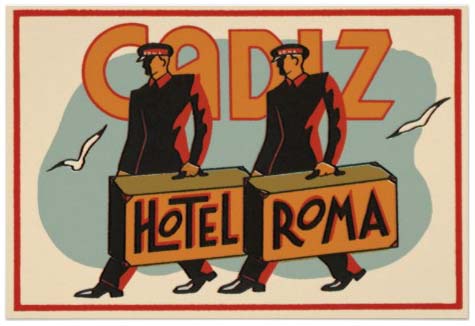
HOTEL CADIZ ROMA

Finally, I can’t wait to read the rest of your travel-inspired books. What you do love about travelling the most?

Telling stories. And also going back to my roots because my heritage has been determinant in my life choices and in my writing. Writing was always a refuge for me, especially when we left Chile. I love the fact that I can write about extremely different places and experiences. I wrote for National Geographic – about Rwanda, for example. Several years ago, I joined the French Doctor where my husband was working as a surgeon. He is a plastic surgeon who also does reparatory and reconstructive surgery. It’s a totally different experience of course than to write about hotels or glamourous destinations, but I try to keep an open mind and I think that the entertainment which a lighter book can bring also has an influence that can be as strong on somebody as the description of a more sensitive issue. Our world is complex and I like the idea that people who read my work are also complex and can be touched by any kind of subject. I learned a lot by working for National Geographic and going on humanitarian missions, but also by trying to be lighter and enjoy life. When you travel, you learn to adapt yourself, you learn that you must be prepared for all kind of things, and that there are no certainties. You see life in a different way. All those aspects are very important to me. That is what I love the most about travelling.

Francisca Matteoli

www.franciscamatteoli.com
www.franciscamatteoli.com/blog/

UPON THE BOATS OF DAL LAKE

The wonderful boats of Dal Lake are as much a part of this stretch of water as the colourful kingfishers & lilypads. Around the the lake’s edges sit rows of grand old houseboats or ‘floating palaces’, which were introduced by the British Raj in the 19th century. The British Raj were not allowed to own land in Kashmir & so instead, they made their homes on the water. Made out of sturdy cedar wood & built with lavishly furnished rooms, verandas & sun-decks, the houseboats were large, luxurious and probably hosted many opulent parties in days gone by. More recently, one particular houseboat called the Clermont, was entertained by Ravi Shankar as he taught a certain George Harrison to play the sitar. Join the wonderful Michael Palin as he visits the lake & the old houseboats here –

Boats have been vital to local people for centuries, serving not only as modes of transport, but also as homes, workplaces & market stalls. Naman Arya has a written a great article on a recent visit to the lake & describes seeing boats used as clothes shops, cafes & even a floating post office…..amazing!

However, the most distinctive boats on Dal lake are the Shikaras, which are the small, brightly coloured gondolas which criss-cross the water day & night. They are mainly used as taxis – especially by tourists, but Shikaras have been also been widely used for fishing & harvesting the Lake’s lush vegetation. They are the perfect way to experience the wonderful surroundings of the lake & the endless mountain range.