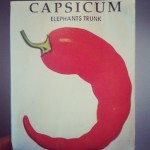
Chillies are one of my most favourite things. They come in such beautiful colours and shapes (like the wonderful packet of East Indian chillies I picked up in Kerala, left) & they’re always so exciting to eat and cook with. I think that I’m actually slightly addicted to that heat rush, but despite often burning my mouth & developing irritating hiccups, I always come back for more.

The chilli is native to Central and South America and the Carribean, so it’s no real surprise that this spice was one of the first additions to the earliest forms of chocolate, made by the forefathers of the Mayans and Aztecs. Along with Vanilla, Bee Honey and the peppery Ear Flowers (right), Chilli was used to add flavour to the bitter liquid they called xoclatl.
According to Fred Czarra (Spices, A Global History), the Spanish were the first to bring chillies to Europe, courtesy of Christopher Columbus in the 16th century. The Spanish & Hernando Cortes are also often thought to be responsible in bringing chocolate to Europe soon after. However, it was the Portuguese who were probably responsible for taking chillies to South and East Asia, via their mighty trading routes which ran from Brazil to Macao and Goa.

The heat of a chilli is measured by the Scoville Heat Index, named after the pharmacist William Scoville. The hottest chilli on record is the Trinidad Scorpian ‘Butch T’, discovered in Australia in 2011 which measured 1,463,700 Scovilles. By comparison, a jalapeño comes in at 10,000!
The home of the chilli belongs to Mexico, who use them in salsas (guajillo), pickles (jalapeno), for stuffing (manzano) and even as vegetables (poblano). My favourite is the chipotle, which is a mild, dried & smoked jalapeño and will star in our Mexican chocolate bar. They have a delicious, smoky flavour and just the perfect amount of heat.
Chocolate and chilli also star in Mole, which is a dark, rich sauce popular throughout Mexico. Here’s a recipe for Chicken Mole, which tastes like a Latino Chicken Chasseur & goes perfectly with rice & home-made guacamole. It’s a simplified recipe for four people, which is easy to cook but will take you about an hour…
1. Blend 1 clove of garlic, 1 sliced onion, 500g of chopped tomatoes, 4 tablespoons of toasted sesame seeds, 1, tablespoon of paprika, 1 teaspoon of cumin, 1/2 teaspoon of ground cloves and 1 teaspoon of chilli powder (I’m using a mild Guajillo chilli). This gives you a rich fragrant tomato sauce.
2. Heat some oil in a big pan, then add the tomato sauce and simmer for 20 minutes, then cover & leave.
3. Cover 4 chopped chicken breasts with 1 chopped clove of garlic, 1 sliced onion and a few sprigs of mint in a pan with water & simmer for 30 minutes until the chicken is white & tender. Then remove the chicken & add to the tomato sauce. Finally carefully strain the remaining stock from the pan into a container & put to one side.
4. Pour a little of your stock into the pan with the tomato sauce & chicken, add 25g of dark chocolate & stir / simmer for ten minutes or so until the sauce thickens. Add more stock if the sauce becomes too thick, then serve up!


 The aromatic Chipotle chillies used in our Luxury Dark Chocolate Mexican Bar start out life as green jalapenos, which are left to grow until they turn dry & take on a lovely shade of dark red. The chillies are then transferred to wood-burning chambers for several days in order to absorb smoke & remove any remaining moisture. The farmers are then finally left with these wonderfully smoky mild chillies which are transported all across Mexico to be used in a whole range of traditional sauces, including Salsa & Adobo.
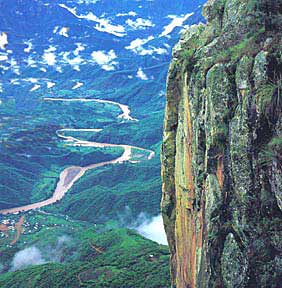 Most Chipotle chillies are actually produced in Chihuahua, which sits on the country’s northern border with the US & is also the biggest state in Mexico. Chihuahau literally means ‘the place where the rivers meet’ – the rivers being the Chuviscar and the Sacramento, which flow from Colorado & California respectively. Chihuahua is a vast state which contains an incredible variety of environments, flora & fauna. The state is home to great forests & mountains, Copper Canyon – which is officially larger than the far more famous Grand Canyon (see right), the fascinating crystal caves of Naica Mountain & the wide Chihuahuan desert. Oh yes, Chihuahua is also apparently where those strange little dogs originate from too!

