CARDAMOM

Green CardamomCardamom has an interesting past going back thousands of years, as the spice travelled across many great civilisations & countries. India has traditionally used the spice for medicinal purposes in the form of Aruveyda, as well as now being a key flavouring in Garam Masala spice mix & delicious Masala Chai Tea. The ancient Egyptians used to whiten teeth & the ancient Greeks & Romans used it to aid digestion & as a perfume & breath freshener. Many Arab cultures also add Cardamom to coffee, while the spice is also at the heart of various Scandanavian breads such as Pulla & Julekaka, after the Vikings visited Constantinople.

Cardamom is also a valuable spice which hails from Kerala in India, alongside Black Pepper & Ginger. It comes from a tall, thin plant in the form of tiny pods, which contain the fragrant seeds. There are two main types of Cardamom – green & black. Green Cardamom has a woody & slightly citrus flavour, while Black Cardamom has a cooler, smokier flavour. And since the Cardamom plant requires the same hot & wet climatic conditions as Cocoa, maybe Chocolate & Cardamom were always meant to be together. I find that Cardamom combines especially well with sweet creamy white chocolate, so here’s a simple recipe for a White Chocolate Mousse which will serve around 5-6. I say, 5-6 because I find that a small amount of this rich desert is ample. This desert is also excellent at cleansing the palate after some spicy food!

Cardamom White Chocolate  Mousse1. Crush around 20 green cardamom pods & put the seeds to one side.
2. Slowly melt 200g of white chocolate in a bowl over a pan of simmering water & add the cardamom seeds. You can also add milk if you want to stretch the ingredients further.
3. Add four medium egg whites into a bowl & whisk until stiff.
4. Gently fold the egg whites into the white chocolate mix until everything is perfectly blended.
5. Place in small containers or glasses & leave in the fridge overnight. The longer you leave them, the better the texture & the more infused the spice. Enjoy!
WONDERFUL CHILLIES

elephants_trunk

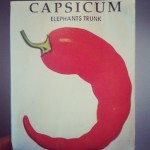
Chillies are one of my most favourite things. They come in such beautiful colours and shapes (like the wonderful packet of East Indian chillies I picked up in Kerala, left) & they’re always so exciting to eat and cook with. I think that I’m actually slightly addicted to that heat rush, but despite often burning my mouth & developing irritating hiccups, I always come back for more.

Ear Flowers

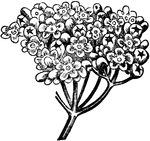
The chilli is native to Central and South America and the Carribean, so it’s no real surprise that this spice was one of the first additions to the earliest forms of chocolate, made by the forefathers of the Mayans and Aztecs. Along with Vanilla, Bee Honey and the peppery Ear Flowers (right), Chilli was used to add flavour to the bitter liquid they called xoclatl.

According to Fred Czarra (Spices, A Global History), the Spanish were the first to bring chillies to Europe, courtesy of Christopher Columbus in the 16th century. The Spanish & Hernando Cortes are also often thought to be responsible in bringing chocolate to Europe soon after. However, it was the Portuguese who were probably responsible for taking chillies to South and East Asia, via their mighty trading routes which ran from Brazil to Macao and Goa.

Bhut Jolokia

The heat of a chilli is measured by the Scoville Heat Index, named after the pharmacist William Scoville. The hottest chilli on record is the Trinidad Scorpian ‘Butch T’, discovered in Australia in 2011 which measured 1,463,700 Scovilles. By comparison, a jalapeño comes in at 10,000!

The home of the chilli belongs to Mexico, who use them in salsas (guajillo), pickles (jalapeno), for stuffing (manzano) and even as vegetables (poblano). My favourite is the chipotle, which is a mild, dried & smoked jalapeño and will star in our Mexican chocolate bar. They have a delicious, smoky flavour and just the perfect amount of heat.

Chocolate and chilli also star in Mole, which is a dark, rich sauce popular throughout Mexico. Here’s a recipe for Chicken Mole, which tastes like a Latino Chicken Chasseur & goes perfectly with rice & home-made guacamole. It’s a simplified recipe for four people, which is easy to cook but will take you about an hour…

1. Blend 1 clove of garlic, 1 sliced onion, 500g of chopped tomatoes, 4 tablespoons of toasted sesame seeds, 1, tablespoon of paprika, 1 teaspoon of cumin, 1/2 teaspoon of ground cloves and 1 teaspoon of chilli powder (I’m using a mild Guajillo chilli). This gives you a rich fragrant tomato sauce.

2. Heat some oil in a big pan, then add the tomato sauce and simmer for 20 minutes, then cover & leave.

3. Cover 4 chopped chicken breasts with 1 chopped clove of garlic, 1 sliced onion and a few sprigs of mint in a pan with water & simmer for 30 minutes until the chicken is white & tender. Then remove the chicken & add to the tomato sauce. Finally carefully strain the remaining stock from the pan into a container & put to one side.

4. Pour a little of your stock into the pan with the tomato sauce & chicken, add 25g of dark chocolate & stir / simmer for ten minutes or so until the sauce thickens. Add more stock if the sauce becomes too thick, then serve up!

HERNANDO CORTES: DISCOVERER OF COCOA?

Hernando CortesHernando Cortes was a famous Spanish explorer who tred in the footsteps of Christopher Columbus during the 16th century. Cortes was a controversial & bold leader, however he is also widely regarded as the first European to discover chocolate.

After spending years in Haiti & Cuba, Cortes moved onto his most famous expedition in Mexico, where he defeated King Montezuma & the Aztec Empire, then developed Mexico City (formerly Tenochtitlán) into the most important European city in the Americas. However, the defeat – by a dramatically smaller army – may have actually been largely assisted by a Smallpox epidemic brought over by the Spaniards, which then spread like wildfire throughout the Aztec population, as suggested by great American historian William H McNeill.

During the conquest, Cortes also tasted a warm, bitter drink made with cocoa beans called ‘xocoatl’. This was also called the ‘royal drink, which Emperor Montezuma apparently consumed 50 times a day. Furthermore, Cortes noted that the Aztecs were using cocoa beans as a currency substitute for gold, which led him to promote the development of cocoa bean plantations across Mexico, Trinidad, Haiti & throughout the Caribbean.

However, there is actually little historical evidence to suggest that Cortes was the first transporter of chocolate to Europe. In fact, in the book ‘The True History of Chocolate’, the writers states “No one knows for sure when cacao first reached Spain. There is no credible evidence to support the oft-repeated claim that it was the work of Hernán Cortés. He sent a ship to Spain from the coast of Veracruz in 1519 and visited Charles V in person in 1528 with “a dazzling sample of Mexico’s riches and wonders” including dwarves, bouncing rubber balls, monsters, and albinos, fans, shields, plumes, obsidian mirrors. But no mention of chocolate. More likely is that the Maya introduced it to Europe. Specifically the Kekchi Maya of Guatemala, who live in the Alta Verapaz (True Peace)… beautiful region of cloud-swirled mountains. Here, Dominicans led by Bartolomé de las Casas had taken over a delegation of Maya nobles to visit Prince Philip in Spain in 1544. Amongst the other things they brought were ‘receptacles of beaten chocolate’ “.

Maybe we’ll never know for sure……

MINT

Mint is one of my favourite flavour addition to chocolate – I love that clean, fresh taste that bites through strong, dark chocolate. And I especially enjoy mint chocolate after a curry, it’s the perfect dessert to clean the palate of those intense eastern spices.

Mint is a native Mediterranean herb & is probably one of the original flavours which Europeans attempted to combine with cocoa, when it started to flow from Central America during the 16th century. Some Europeans hated the taste of the bitter cocoa, whilst others looked for cheaper substitutes to the expensive traditional cocoa mixers which came from Mesoamerica, such as Vanilla.

The herb is now found much further afield & used in a whole range of delicious recipes. The Vietnamese use lots of mint to garnish their national dish, Pho (pronounced fur), which is a delicious, fragrant meaty soup. Mint is also the main ingredient of Touareg tea, which is popular across North African & Arab countries. The two most common mints consumed are Peppermint & Spearmint. Peppermint has always been the most popular to combine with chocolate, however I also love the less-intense flavour of Spearmint, especially the Nanah variety from Northern Morocco.

Here’s a simple but beautiful Mint chocolate recipe, developed by the extremely talented Ferran Adria from El Bulli…

Mint & Chocolate

Buy yourself a bunch of fragrant mint & pick off around 100 nice leaves & place them on a chopping board or tray. Then melt 50g of quality couverture in a bain-marie until the chocolate is smooth, silky & around 88 degrees fahrenheit. Use a spatula to cover each mint leaf & allow to cool & set for about four hours. The results are amazing – the thin coat of chocolate melts in your mouth & leaves you with a layer of crunchy mint leaf. I also love the two-tone colour combination of the leaves – shiny dark brown on top & lush green underneath. I’d recommend eating these soon after cooking as the mint leaves will lose their flavour & texture. And if you’re wondering what to do with the rest of your mint, I’d highly recommend a pot of hot, refreshing mint tea!