BLACK PEPPER

Black Pepper

Black Pepper is possibly my most favourite of spices & I will never miss an opportunity to add some of this distinctive heat & seasoning to any food. Hence, it was only natural that we should also throw in a little of bit this wonderful spice to our Indian milk chocolate bar.

For as long as spices have been traded, Black Pepper has always been the most highly prized. Demand was once so high that the spice was even referred to as ‘black gold’.

Black Pepper originates from the wonderful Western Ghats in South Western India, which is an expanse of lush green rainforest up in the mountains of Kerala. The pepper grows as berries on vines attached to trees. The berries are then picked before they ripen then left to ferment & dry – a process which turns the berries hard & dark in colour. I was lucky enough to see the spice grow here myself & taste it on some delicious local chicken dishes.

Vasco de Gama & the Portuguese were the first modern European nation to capitalise on the demand for black pepper in the West around the start of the 15th century, just before the Mughals began to take control of India. After numerous battles & political stalemates with the natives, Portugal became the main exporter of Black Pepper back to Europe – breaking the Islamic monopoly on the region’s spice trade whilst establishing their own extensive colonies along the west coast of India. And their influence is still strong there today, especially in places such as Goa & Cochin, where de Gama eventually died.

As control of the spice routes changed hands, Black Pepper began to appear in other parts of the world, including China, Sumatra, Vietnam & Indonesia. This expansion has in turn led to the emergence of all kinds of varieties of Black Pepper. There’s a Penang Black Pepper, which has a bold flavour, a Sarawak Pepper, which is known for it’s unique, winey taste and a Lampong Pepper which has a smoky tone, amongst others. And that’s without mentioning White, Green & Pink Peppers….& here’s a more recent piece focusing on Sichuan Pepper.
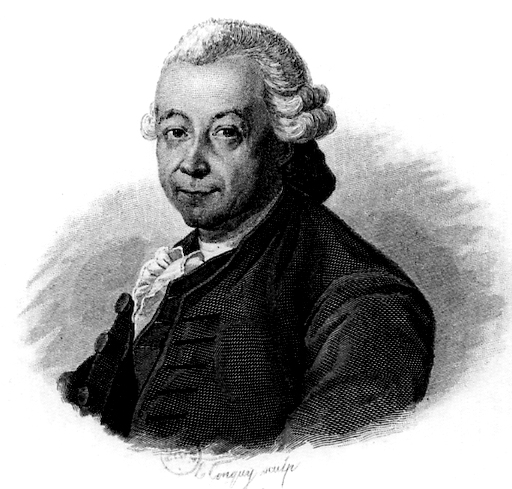
PIERRE POIVRE

PIERRE POIVRECountries worked very hard to prevent spices from leaving the native islands they controlled. The Molucca Islands in Indonesia were a particular example, being the only place in the world which grew mace, nutmeg & cloves. Frank Czarra (Spices:A Global History, 2009) talks about the Dutch covering their nutmeg crop with lime to prevent reseeding & setting clove groves on fire to avoid new plants being grown.

However in the late 18th century, the brilliantly named Pierre Poivre (Peter Pepper) finally succeeded in stealing vital seeds from under the Dutch’s noses. Poivre had spent time travelling the world as a French missionary and was instrumental in his nation winning the vital port of Pondicherry in India. More significantly to this tale, he was also keen botanist.

Poivre had attempted unsuccessfully to grow nutmeg & cloves on French soil, but while being stationed as political official in Mauritius, he developed a tropical garden & then returned to the Moluccas on a successful seed smuggling mission. Within thirty years, the French were successfully growing cloves in Madagascar, Zanzibar & Pemba, followed by the British in the Carribbean & the Portuguese in Brazil.

Poivre eventually returned to his native Lyon & died in 1786. However, his legacy lives on through the Botanical gardens of Pamplemousse in Mauritius (inspired by a local grapefruit tree) where he first grew his cloves, the island Poivre Atoll, which was dedicated to him in the Seychelles & his book ‘Voyages of a Philosopher’, which was read with interest by Thomas Jefferson. Many people believe he was also the inspiration for the wonderful old British tongue-twister….

Peter Piper picked a peck of pickled peppers.
A peck of pickled peppers Peter Piper picked.
If Peter Piper picked a peck of pickled peppers,
Where’s the peck of pickled peppers that Peter Piper picked?

PAINTINGS OF KERALA – RANDU

Backwaters
Here’s the second in the series of paintings by our Keralan friend, Manu Pe. This scene reminds me so much of the view we had from our room whilst staying at Manu’s Backwater Farmhouse. We’d sit here every evening, watching the boats float by, whilst the sun fell behind the palm trees & this wonderful Malaylam music eminated from the local temple. I adored hearing these amazing old songs – typified by flutes, tablas, strings & sweet vocals – filling the warm air every dawn & dusk across Kerala. Ahhhh, I’m transported back there right now……

Paintings of Kerala (Onnu)
http://backwaterfarmhouse.com/

FATHER’S DAY ACROSS THE WORLD

On the 16th June, many countries around the world celebrate Father’s Day, which also seems to be a very popular reason to buy our luxury chocolate bars! However, Father’s Day is celebrated very differently across the places connected to our luxury chocolate…

LUXURY MILK CHOCOLATE WITH MASALA CHAIIndia
Father’s day continues to grown in popularity across India. Among Hindus, the day is often celebrated with a special religious ritual (puja) dedicated to fathers, either at home or at the local temple. Fathers have a very high status in India, next only to god.


LUXURY DARK CHOCOLATE WITH CHIPOTLE CHILLIMexico
Here, it’s a big family day where people give gifts and prepare & eat a large meal together. Although in Mexico City’s Bosque de Tlalpan, the day is celebrated by a festival & Carrera del Dí­a del Padre, which is a 21km race!


LUXURY MILK CHOCOLATE WITH PINK DIAMOND SALTHimalaya
People of the Kathmandu region celebrate their equivalent, Gorkana Aunsi around late August. The event, which literally means ‘looking at father’s face’, involves gifts, sons & daughters performing ceremonies of respect to their fathers & also visits to the temple, as it coincides with new moon day in the Hindu calendar.