LIFE OF PI & PONDICHERRY

Life of Pi is a visual feast & a real heart-warming treat, not to mention a film which more than justifies the introduction of 3D. It’s a beautiful story of a young Indian boy called Pi, who must overcome the hardest of challenges as he’s left floating across the ocean in a life raft with a Bengal Tiger. The feelings & thoughts of Pi alongside the colours, sounds & wonderful animals throughout made this the most touching film I’ve seen for while. The story also has more than a few similarities to Hemingway’s Old Man & The Sea. The film also opens in lush green Pondicherry & with the references to it’s French colonial past, I wanted to discover more about the history of this town in Tamil Nadu, Southern India.

Pondicherry formed part of French India, which covered a great stretch of the Eastern coast of India from the 17th century right up until 1956. Ports were built here by the French East India Company in order to compete with their well established British & Dutch rivals in shipping silk, spices & sugar back to Europe. Nowadays, according to Matt Gross (Pondicherry’s French Connection, 2008), Pondicherry ‘is like India seen through a French lens……you see tile roofs and wooden shutters, balconies and colonnades, wide brick streets and pastel Catholic churches’. There’s even boules, baguettes & the Tricolor! And you can learn & see more from Rick Stein’s fascinating travels to the city here, 38 minutes in….

MOROCCO: AFRICAN CUP OF NATIONS 2013

Flag of MoroccoWe will be paying particular attention to Morocco‘s progress in the African Cup of Nations Cup, which takes place in South Africa from January 19th 2013. Aswell as becoming the pride of the continent, the competition winners will also automatically qualify for 2014 World Cup in Brazil.

Morocco have been grouped alongside one of the favourites, South Africa as well as outsiders Angola & Cape Verde. Morocco should qualify from Group A, however the ‘Lions of the Atlas’ are not expected to progress too far in a competition they last won in 1976. Back then, they drew 1-1 against Guinea in Ethiopia, with a late goal from Ahmed Baba Megrouh to win the title. Could it be Morocco’s time again?

HERNANDO CORTES: DISCOVERER OF COCOA?

Hernando CortesHernando Cortes was a famous Spanish explorer who tred in the footsteps of Christopher Columbus during the 16th century. Cortes was a controversial & bold leader, however he is also widely regarded as the first European to discover chocolate.
After spending years in Haiti & Cuba, Cortes moved onto his most famous expedition in Mexico, where he defeated King Montezuma & the Aztec Empire, then developed Mexico City (formerly Tenochtitlán) into the most important European city in the Americas. However, the defeat – by a dramatically smaller army – may have actually been largely assisted by a Smallpox epidemic brought over by the Spaniards, which then spread like wildfire throughout the Aztec population, as suggested by great American historian William H McNeill.

During the conquest, Cortes also tasted a warm, bitter drink made with cocoa beans called ‘xocoatl’. This was also called the ‘royal drink, which Emperor Montezuma apparently consumed 50 times a day. Furthermore, Cortes noted that the Aztecs were using cocoa beans as a currency substitute for gold, which led him to promote the development of cocoa bean plantations across Mexico, Trinidad, Haiti & throughout the Caribbean.

However, there is actually little historical evidence to suggest that Cortes was the first transporter of chocolate to Europe. In fact, in the book ‘The True History of Chocolate’, the writers states “No one knows for sure when cacao first reached Spain. There is no credible evidence to support the oft-repeated claim that it was the work of Hernán Cortés. He sent a ship to Spain from the coast of Veracruz in 1519 and visited Charles V in person in 1528 with “a dazzling sample of Mexico’s riches and wonders” including dwarves, bouncing rubber balls, monsters, and albinos, fans, shields, plumes, obsidian mirrors. But no mention of chocolate. More likely is that the Maya introduced it to Europe. Specifically the Kekchi Maya of Guatemala, who live in the Alta Verapaz (True Peace)… beautiful region of cloud-swirled mountains. Here, Dominicans led by Bartolomé de las Casas had taken over a delegation of Maya nobles to visit Prince Philip in Spain in 1544. Amongst the other things they brought were ‘receptacles of beaten chocolate’ “.

Maybe we’ll never know for sure……

TYPES OF COCOA BEAN

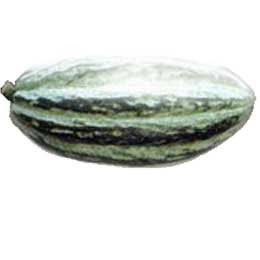
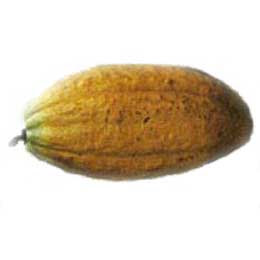
There are three main types of cocoa bean used in chocolate today, differentiated by colours, flavours & proteins.

FORASTERO
Forastero bean
These sturdy beans make up around 80% of the world’s cocoa and are the beans most likely to be found in cheaper chocolate, due to their weaker aroma and often bitter taste. Originally from the Amazon, Forastero trees now grow across the world – the most common being the mild Amenolado, which is grown in West Africa.

CRIOLLO
Criollo bean
This is the finest cocoa bean and the first to have been consumed by Europeans after Hernando Cortez visited Mesoamerica in the 16th century. These beans are highly aromatic and generally have a fruitier flavour, while Criollo chocolate is also reddish in colour. The Criollo is now much rarer than its Forastero cousin, probably due the bean’s weaker resistance to disease. Venezuela is home to the best Criollo beans, including the ‘pure’ beans from the Chuao plantation and the rare, white Porcelana bean from Lake Maracaibo.

TRINITARIO
Trinitario bean
This bean is a hybrid of the Forastero & Criollo beans and is the bean most likely to be found in premium, dark chocolate. The flavour of Trinitario beans can also range from spicy to earthy & fruity. Trinidad originally grew Venezuelan Criollo trees in the late 17th century. Unfortunately, the foreign trees were not suited to their new environment, resulting in a collapse of the country’s chocolate production in the early 1800’s.

Thankfully, Trinidad revived it’s industry with the introduction of the more robust Forastero trees in the mid-18th century. This development also led to the creation of the new Trinitario bean, as the Forastero was combined with Trinidad’s few remaining Criollo trees. The success of the Trinitario bean also led to it’s growth across the world from Ecuador to Cameroon and Java.